
Creativity and the Bitcoin Ecosystem
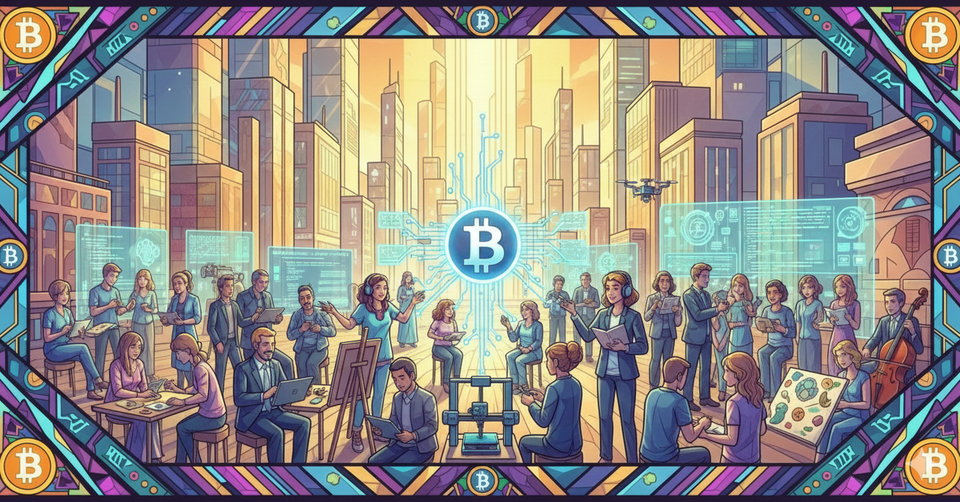
This is the second article in my take on the Three Cs of Bitcoin. In the first article, I looked at Culture in the Bitcoin Ecosystem. In this article, I explore Creativity.
Mihaly Csikszentmihalyi's describes creativity as "the process of producing something that is both original and worthwhile." Originality, the quality of being novel or unusual (also known as divergent thinking) combines with the constraint of being useful or valuable in a particular domain. While creativity is the spark (generating ideas), innovation is the execution (making them scalable and impactful).
As with the old saying, "necessity is the mother of invention," Bitcoin was born out of the necessity for an alternative to the centralized and broken banking system. It started with enthusiasts trying out the code for themselves and discovering what worked. It then grew over time into a vast network of miners, node runners, and hodlers - a network which now includes exchanges, wallet providers, architectural layers, regulated financial products, and institutional investors. The creative Bitcoin frontier has been built out one novel solution at a time.
The creation of Layer 2 solutions such as the Lightning Network is a perfect example of invention born out of necessity, namely: historically high fees, slow settlement on-chain, and the need to scale for mass adoption. The creative solution was original in moving payment channels off-chain, enabling near-instant, low-cost transactions without altering Bitcoin's base layer. It was worthwhile because it addressed real-world limitations, enabling Bitcoin to grow from a store of value into a viable medium of exchange for everyday use.
In his book Unstable Innovation, bitcoiner and entrepreneur Nelson Inno says innovation is not a set of tools but a dynamic state of mind, something that drives us when we have an urge to "do something". The urge to "do something" in Bitcoin has transformed it from a hobby-level project to a dynamic platform, today propelled by hubs like Presidio Bitcoin in San Francisco (and others across the globe) where visionaries, developers, product managers, and end users can gather and share ideas and inspiration.
It was at one of the monthly Presidio Bitcoin meetings, called "Builder", when I watched a developer show how to vibe code. He was already an experienced coder, and yet the tools really did the heavy lifting! Even though I had not touched code for more than 15 years, I thought maybe I could give it a try? Just one month later, I attended Builder again and demoed my first vibe-coded Bitcoin web app that took me all of 5 hours and required no coding knowledge. The creative ethos of the Bitcoin community says, you can just do things.
Due to the maturation of the ecosystem, you can create in the Bitcoin space even when not employed by a company. There are groups that sponsor developers, projects, or hackathons to encourage innovation and development of new solutions beyond those that might be easily monetized. Groups like Spiral (an arm of Block), The Human Rights Foundations, and Open Sats provide grants for bitcoin development. Hackathons, where developers can compete for mentorship or grants, are another example of ways that individuals can plug into resources to create in Bitcoin or Layer 2.
The accessibility of development within Bitcoin ecosystem ties back into some of what I discussed in the article on Culture, namely that Bitcoin was born on a foundational principle of being open-source. Anyone in the community can, with the help of books such as Mastering Bitcoin by Andreas Antonopoulos or other resources, learn Bitcoin code and ultimately contribute to the technology that drives it. The values of transparency, verifiability, decentralization and the permissionless nature of Bitcoin foster freedom and openness in creating on and expanding the network.
Beyond technical development, content creation in the advancement of Bitcoin has been equally original and worthwhile. At the Pacific Bitcoin conference in 2023, one of the presenters made the audience laugh by declaring that "we need more Bitcoin podcasters". It soon became evident that he did not mean it as a joke. The speaker went on to explain that we will never know which podcast, or video, or article will be the one to reach someone new. We should be creating more Bitcoin podcasts, not fewer, was his message.
With platforms such as Fountain for podcasts and the NOSTR decentralized protocol for creators and followers, new realms continue to open up to reward and incentivize creative work. For example, the nonprofit Bitcoin for the Arts supports artists with bitcoin micro-grants and other programs. Global organization BTrust, which offers grants for bitcoin development, also provides funding for educators, researchers, and event organizers in Africa, India, Latin America, the Middle East, North Africa, and Southeast Asia. With the help of an array of self-publishing tools, social media sites, and now with AI, anyone with knowledge to share about Bitcoin can create compelling content for their audience, which may be exactly what their audience needs to find.
Bitcoin doesn't just enable building on its code or encourage authors and influencers; the anti-inflationary properties of BTC allow you to get back your precious time, so that you can finally create instead of just survive. By preserving value over decades, Bitcoin lowers time preference—encouraging saving, planning, and freedom from the daily grind. With commitment and patience, bitcoiners have been able to leave jobs they only held for the paycheck to explore their passions. I believe that the future on a Bitcoin standard allows more of humanity to create their own paths in life.
Whether you wish to be a supporter or a creator yourself, or you wish to build financial freedom for yourself and your family, the tools and resources to do so keep getting better and more aligned with a Bitcoin future.
Member discussion