
Culture and the Bitcoin Ecosystem
As a new contributor to The Bitcoin Pivot, I wanted to explore for myself what “Three Cs of Bitcoin”, Culture, Creativity, and Connection, mean to me ”. In this first of three articles, I present my take on the first C, “Culture”.
What is culture exactly? Early anthropologists thought of culture as "that complex whole which includes knowledge, belief, art, morals, law, custom, and any other capabilities and habits acquired by man as a member of society." Beliefs, laws, and customs are passed down through families, churches, and institutions so that new generations are shaped by the norms of the previous.
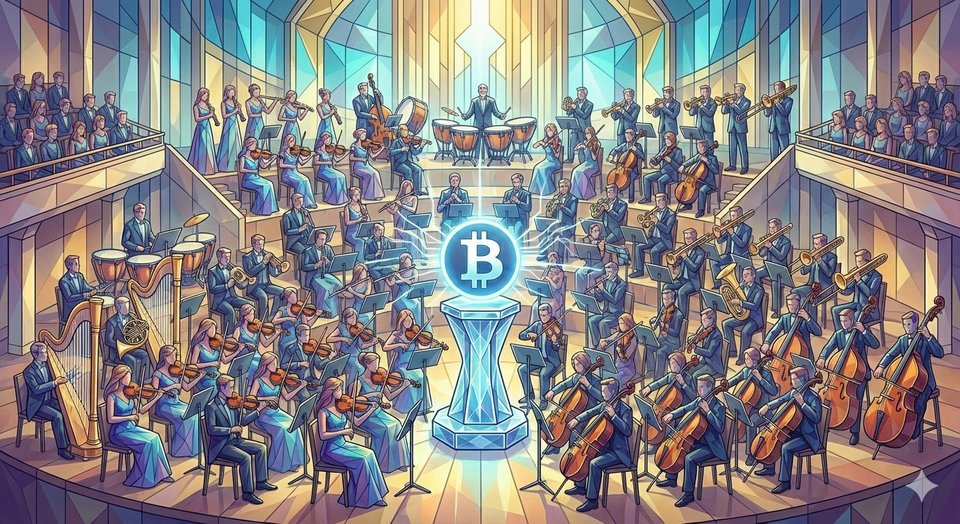
For example, in graduate school for organizational psychology, we learned about the culture at the Berlin Philharmonic, and example of a group's customs persisting over time. Researchers documented the orchestra’s norms and kept tracking them as members came and went. There eventually came a year when none of the original members of the philharmonic were there anymore, and yet the norms that had been established by the very first group were still in-place and just as strong.
Bitcoin culture, ever since the first block was mined in 2009, has done the same thing: one mailing list, one podcast, and one meetup at the time.
Before I attended my first Bitcoin meetup in early 2022, I didn’t know for sure what to expect. I had already signed up for the Bitcoin conference in Miami, but at that point I still didn’t know anyone. That fact seemed a little daunting, even for someone like me who loved diving into new communities and industries. What I did know about Bitcoin and “Cryptocurrency” had mostly come from Google, videos, and perhaps a few Twitter personalities. I decided to go to a local meetup ahead of Miami to find out if I was about to be surrounded by a bunch of nerds, crypto bros, wingnuts or all three. Rather than trust my presumptions, I decided to see for myself.
Those first couple of meetups, far from being techie-, nerd-, or bro-fests turned out to be attended by pretty normal people - men, women, younger, older - and from a wide range of backgrounds. Sure, there were some techie/developer types, and maybe a couple I’d tentatively put in the conspiracy-theory bucket, but there were also people coming from traditional finance, or from the sciences or just regular jobs. There were writers, people looking to start new companies, homesteaders, and at least one with an HR background like me. The vibe at these meetups was super-friendly and not at all combative. All of my beginner questions were welcome.
In joining new groups and environments, humans naturally observe the culture and adapt (at least to some degree) to fit in. This trait helped us survive all those years ago when acceptance in a tribe meant life or death. Now we use and respond to social cues automatically. Who tends to talk and when? How formal or casual is the conversation? What happens when a new person arrives? Etc. Before I ever had a degree in psychology, I understood the value of paying attention to the norms of a new community.
What were some of those bitcoiner norms? For one, I learned that a seemingly innocent question about “crypto” might be tolerated at first but would quickly be steered back to Bitcoin only. Within the “Bitcoin” topic umbrella though, people would freely share any and all views and advice. There was a definite openness to debate and teach. At the same time, personal privacy was highly guarded, many preferring to share only their handle rather than a real name. For obvious reasons, asking about how much BTC someone had was a faux pas. These meetups were advertised publicly and open to all, but it was only once I had been to a few meetings that I got invited to the Telegram group, another cultural norm.
Almost universally when meeting a new person the conversation would begin with, “So how did you get into Bitcoin?” The telling of one’s “Bitcoin journey” was like a tribal ritual. This was when I discovered how different, and at the same time, how similar everyone’s story was. People found out about Bitcoin, perhaps from a friend or co-worker, or podcast, and then maybe they tried it out or bought some small amount. Learning and watching over time, something told them Bitcoin was worth studying more, and then they went “down the rabbit hole” until they came out on the other side believing in Bitcoin above all others. I heard this same story again, and again, and again.
On that note, there was a lot of other lingo that I had to understand: “hodl”, “bitcoin maxi”, “not your keys - not your coin”, “going to the moon”... As such, 2022 turned out to be my “rabbit hole” year when along with learning from face-to-face bitcoiners I learned about all foundational values and principles that make Bitcoin what it is: decentralization, censorship-resistance, scarcity, trustlessness, verifiability. Values go hand-in-hand with beliefs and become explicit in behaviors that we see as Bitcoin culture, which reinforce the values over time, like the Berlin Philharmonic turning over its members.
But what about that dark side of culture? By the middle of that first year of going to meetups I learned that “Bitcoin maximalism" was a banner that one could either proudly embrace or decidedly reject. On the one hand, to be a “real” bitcoiner meant: taking your Bitcoin off of exchanges, holding your own keys, using an air-gapped hardware wallet, and quite possibly selling all your “fiat” (another term I only learned after immersing myself in the Bitcoin world). On the other hand, for Bitcoin to grow and become money for the world, “normies” (more lingo) would need to be brought along, and it would not be realistic to expect them to go hardcore "maxi".
This apparent contradiction would be nothing new to behavioral scientists, as these are just examples of the many sub-cultures in the complex Bitcoin ecosystem. It’s a paradox that comes from a strong libertarian ethos where individual choices and “voting with your feet” are valued, nested inside of a culture driven by fierce, movement-defining ideology. When you meet a new bitcoiner anywhere in the world, you will instantly have more in common with them than everyone else - and yet you might be so different that you might never have become friends otherwise.
Culture carries forward beliefs, values, traditions - for better or for worse. Culture in the Bitcoin ecosystem has thus gotten us to where we are after just 17 years, and we will need it to drive the next 17 years. An impenetrable culture, however, that rejects growth or outsiders, can lead to insular bubbles and group think. Thus culture, if we let it, can spell doom if we get too caught up in which sub-culture within Bitcoin is the “right” one.
Despite the sometimes contentiousness among those who call themselves bitcoiners, I have overall found the community to be open, generous, passionate about improving society, and future-oriented. In becoming a part of the culture, I myself continue to learn from it. In turn, I will be helping pass on the values and beliefs in sovereignty and sound money.
In my next two articles, I will explore the other Cs of Bitcoin: “Creativity” and “Connection.”
Member discussion