4 min read

The Educators

The Educators
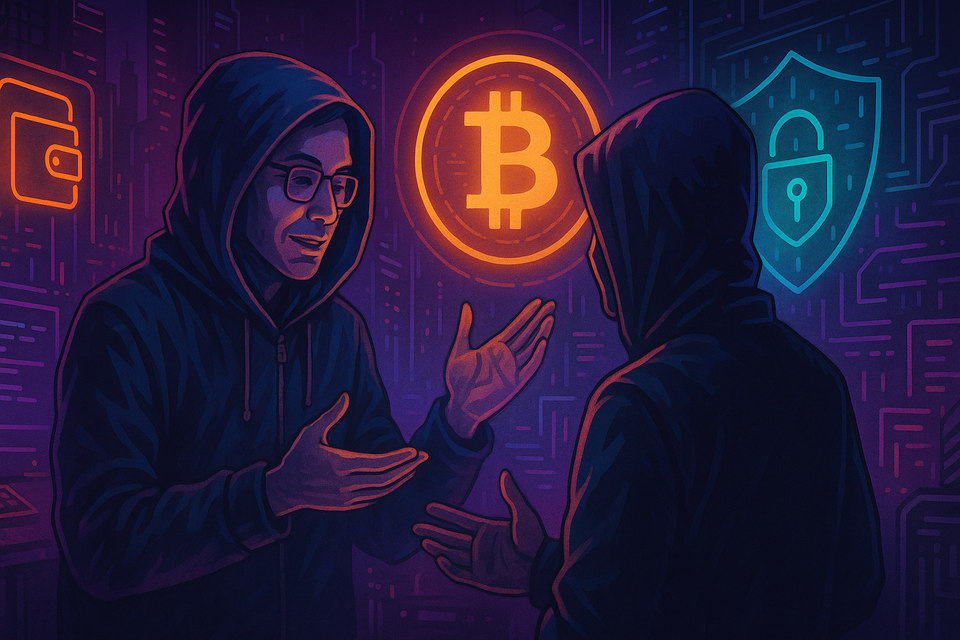
Two cyberpunk figures discuss Bitcoin beneath neon symbols of security and decentralization. Image generated by ChatGPT (DALL·E).

The Soft-Spoken Stewards of Bitcoin’s Soul

If Pieter Wuille refined Bitcoin’s structure with quiet craftsmanship, the next group shaped something just as essential. They ensured that the system he helped build would not remain the domain of specialists or early adopters. They opened the door for the rest of the world. They are the educators, the guides who helped people take their first steps into a strange new monetary landscape.

Before Bitcoin was a market to be analyzed or a movement to be argued about, it was a question. Most people encountered it in fragments like an unfamiliar headline, a half-formed conversation, or a confusing forum thread. They arrived carrying uncertainty. What is this? How does it work? Can it be trusted? What happens if I make a mistake? For many newcomers, these questions had real consequences. They concerned savings, family responsibilities, and a search for stability that existing systems were not providing.

On the other side of that uncertainty stood the educators.

They were rarely the people who wrote the first lines of code or mined the earliest blocks. They weren't the loudest voices on social media or the most visible to the press; but they were the individuals who took time to explain. They were the forum regulars who patiently answered the same beginner questions countless times. They were the meetup hosts who clarified the difference between a wallet and an exchange. They were the writers and speakers who translated dense technical material into something a broader audience could understand. Their work ensured Bitcoin’s story would expand and become more inclusive.

In the early days of Bitcoin Talk, questions arrived in waves. How do I back up a wallet? What happens if a private key is lost? Can someone reverse a transaction? Why does the price behave this way? The tone of the replies mattered more than most people realized. Educators could have responded with impatience. Instead, many chose clarity and patience. Even when the same misunderstandings appeared again and again, they recognized that what felt repetitive to them was brand new to someone else. This instinct helped build a culture where curiosity was welcomed rather than dismissed.

As time passed, some of these educators became widely known. Andreas Antonopoulos offered a rare combination of technical depth and vivid storytelling, helping people see beyond price movements to the deeper implications of censorship resistance and self-custody. Jimmy Song brought clarity to protocols and development for non-engineers. Dan Held connected Bitcoin’s mechanics to macroeconomic trends and digital scarcity. Many others educated through podcasts, YouTube channels, books, and community events. Yet for every name that gained visibility, there were countless others whose work lived entirely in private chat logs, local meetups, and long one-on-one conversations.

The emotional weight of this work is easy to overlook. In the early years, a simple mistake could result in total loss. A wrong address, a misplaced seed phrase, or a moment of misplaced trust could wipe out everything. Educators often found themselves guiding people through moments of fear. Someone who believed their coins were gone forever would reach out in panic, and the educator would calmly help them examine the situation step by step. Sometimes the funds could be recovered. Sometimes they could not. In either case, the educator’s tone shaped more than the outcome. It shaped how that person felt about Bitcoin and about their ability to navigate it.

Their meekness lies in how carefully they use the knowledge they possess. The educators hold an asymmetry of understanding that could easily be used to belittle or intimidate. Instead, they choose to remove barriers. They explain without condescension. They correct without humiliating. They help people find their way through confusion, marketing noise, scams, and tribal conflicts. Educators find balance between education and recruitment. Their goal is not to win arguments. It is to provide enough clarity for people to think for themselves.

As Bitcoin matured, the educators’ responsibilities expanded. They began to explain how to understand the narratives gathering around Bitcoin, such as, digital gold, speculative asset, store of value, hedge against instability. They helped newcomers distinguish between Bitcoin and thousands of projects that borrowed its language but not its principles. They clarified risks, trade-offs, and limits. They resisted oversimplification in a world that often rewards it. Their meekness took the form of intellectual honesty, even when the honest answer was complicated or incomplete.

Today, as Bitcoin intersects with institutions, nation-state policies, and mainstream financial systems, educators remain essential. The complexity has not disappeared. It has simply evolved. They now explain why self-custody matters even when custodians are large and reputable. They clarify how regulation interacts with permissionless technology. They help people distinguish between long-term fundamentals and short-term narratives. Their audiences range from teenagers exploring Bitcoin for the first time to professionals managing significant assets. In every case, the task is to turn confusion into competence, fear into understanding, and curiosity into agency.

If Satoshi provided Bitcoin’s blueprint, Hal Finney gave it a heartbeat, Adam Back gave it continuity, and Pieter Wuille refined its internal structure, then the educators gave Bitcoin its approachability. They ensured that Bitcoin did not become an insiders-only domain. Their patience, generosity, and commitment to clarity helped a global and decentralized understanding take root.

Their meekness is the willingness to stand between complexity and the people trying to understand it, without making the exchange about themselves. They remind us that Bitcoin is a technological system, as well as, a learning journey unfolding across millions of lives. The educators walk beside those who take that journey, not ahead of them.

In the next installment of The Meek Bitcoiners, we turn to the maintainers and reviewers, the quiet gatekeepers who protect the protocol itself. They are the ones who ensure that all of this education rests upon a foundation that remains stable, trustworthy, and worthy of the confidence people place in it.

At The Bitcoin Pivot, we remain committed to illuminating the full range of stories that shape this hard technology, including the quieter currents of calm conviction and understated courage that continue to influence the world’s loudest financial transformation.